Repair
Hail Damage
Was this roof actually hit?
Hail bruises the mat under the granules, so a damaged roof and an untouched one look alike from the ground. This page is what a real assessment counts, and what you're left holding afterwards.
Not what you are looking at? Storm Damage, Metal Roofing.
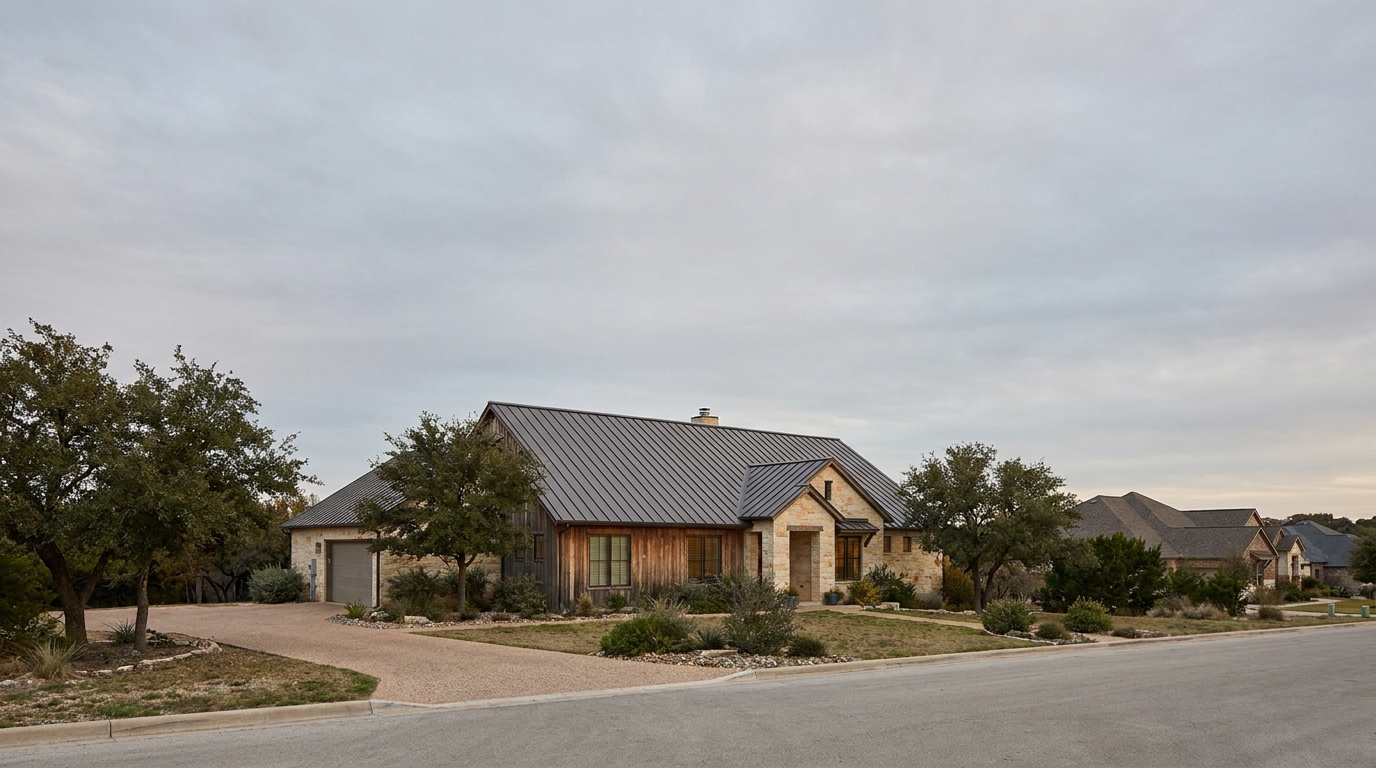
What you are looking for
Hail damage is mostly invisible from the driveway.
What hail does to an asphalt shingle is bruise the mat underneath the granules. The roof can look untouched from the ground for years while its service life has already been cut.
- Granules collecting at the downspout in the weeks after a storm
- Soft dark circles where granules have been knocked clear of the mat
- Dents in soft metal — gutters, vent caps, the flue — which record the stone size
- Splatter marks on painted surfaces, showing which elevations took it
- Nothing visible at all, which is common and doesn't mean nothing happened
How it gets assessed
Test squares, one per elevation.
A hail assessment is a count rather than an impression. A ten-by-ten square is marked on each slope and every strike inside it is recorded, because what decides the outcome is density per elevation, not the worst spot on the roof.
- 01A marked square per slope, with the count written down for each
- 02Soft metals read first — they hold the clearest record of stone size
- 03Direction of impact noted, which is what ties damage to a particular storm
- 04The date of the event established before the assessment, not after
The work itself
What Hail Damage involves.
Hail bruising is often invisible from the ground and still shortens a roof's life. Assessment and documentation of impact damage across each elevation.
Spot repair, or the whole slope
Hail is decided by density, not by the worst impact.
One stone through a vent cap is a component. Forty strikes in a ten-by-ten square across three elevations is a covering with its life cut short, and patching that is spending money to keep an old roof old.
- Low counts confined to one slope, with the mat intact elsewhere
- Damage to soft metal only — gutters and caps — with the field sound
- A roof young enough that the lost years still leave plenty
When the slope has to come off.
Bruised mat doesn't heal and it doesn't leak today. It shortens the roof quietly, which is why the count matters more than whether anything is dripping.
- High strike density repeated across more than one elevation
- Granule loss heavy enough to expose the mat over an area
- A covering already well into its service life when the storm arrived
What you are left with
Dated photographs, elevation by elevation.
Every square, every count and every dented vent cap is photographed with its elevation recorded, and you keep the file whether or not anything is ever claimed. We document what's on the roof. We don't interpret your policy or tell you what it will pay — that part is between you and your insurer.
The next step
The count is the thing.
Bruised mat doesn't leak today and doesn't wait either. Get the elevations counted and photographed while the evidence is still up there — you keep the file whatever you decide to do with it.
Cedar Park · Lakeway · Leander